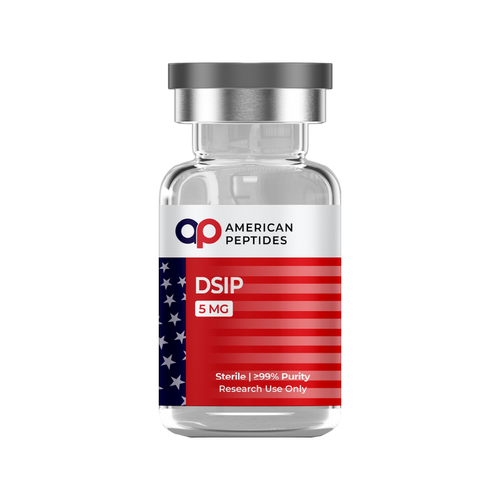
Dsip DSIP – Research Peptide
Introduction
If you’re trying to make sense of dsip for research use, you’ve probably run into the same problem I did the first time we evaluated it: the literature is fragmented, dosing and handling vary across labs, and it’s easy to waste weeks on protocols that don’t match your analytical goals. In this guide, I’ll walk you through what DSIP (Research Peptide) is used for in research settings, how to think about experimental design, and the practical details that help you avoid common failure modes when working with dsip.
By the end, you’ll have a clear checklist for planning experiments, choosing analytics, and documenting conditions so your results are interpretable and reproducible.
What DSIP (dsip) Is in Research Context
In research workflows, DSIP is treated as a peptide analyte whose effects and measurable outcomes depend strongly on experimental conditions. “dsip” is commonly referenced as the research peptide itself; in practice, that means your key variables are not only concentration and exposure time, but also vehicle composition, temperature history, and the analytical readout you use to quantify outcomes.
From my hands-on experience, researchers often underestimate how much interpretation depends on method alignment. For example, a study that reports a biological endpoint without specifying matrix conditions (e.g., protein load, buffer ionic strength, serum presence) is hard to reproduce. When we tightened our documentation—buffer, pH, handling times, and assay conditions—our variance decreased noticeably, and follow-up comparisons became meaningful.
Common research goals for dsip
- Mechanistic screening: testing whether a peptide influences a pathway or cellular behavior under controlled conditions
- Assay qualification: verifying assay sensitivity and dynamic range using a known peptide intervention
- Comparative profiling: comparing responses across doses, exposure windows, or experimental models
How DSIP’s “use” differs from “knowledge”
Knowing what DSIP is at a conceptual level isn’t enough. What matters for research quality is the operational definition you use in your lab: exactly what material you received (purity/grade), how it’s prepared, how long it sits at each temperature, and how outcomes are measured. This is where trustworthiness is earned—through transparent, repeatable methods rather than broad claims.
Handling and Preparation: Practical Steps That Reduce Variability
When I advise teams working with dsip, the biggest improvement usually comes from reducing avoidable handling variability. Peptides can be sensitive to repeated temperature swings, adsorption to container surfaces, and inconsistent preparation steps. Even if your protocol is “close,” small differences can shift assay readouts—especially in low-signal experiments.
A hands-on preparation checklist
- Start with documentation: record lot/identifier, received condition, and storage instructions from the supplier’s materials.
- Plan aliquots before thawing: create working aliquots to minimize repeated freeze-thaw cycles.
- Use a consistent solvent/vehicle: keep vehicle composition the same across all groups, including controls.
- Control mixing: mix using the same technique and time window for every aliquot.
- Standardize timing: if you thaw and prepare, then add to cells/assays, define “time from preparation to exposure.”
- Account for adsorption: choose appropriate plastics/tubes for peptide work and keep contact time consistent.
Why these details matter (the underlying logic)
Most research noise doesn’t come from biology alone—it comes from the experimental boundary conditions. With dsip, that boundary includes how much active peptide reaches the assay system at the moment you measure. If handling changes the effective concentration delivered to your system, the dose-response curve can flatten, shift, or become inconsistent across runs. When we enforced consistent handling windows and aliquot strategy, we saw fewer “outlier runs” that were clearly preparation-related rather than experimental biology.
Designing Experiments with dsip: Dose, Controls, and Readouts
Designing a dsip experiment is less about finding a single “correct dose” and more about making your results interpretable. A dose-response is only useful if controls and readouts are aligned with your intended mechanism.
Controls you should include
- Vehicle control: same solvent/vehicle without dsip
- Blank control for assays: used to confirm baseline signal and background subtraction
- Positive control (when available): helps verify assay responsiveness (not required in every study, but valuable)
Dose and exposure window planning
In practical terms, I recommend planning a small pilot matrix first. For example, use a limited set of doses and one or two exposure windows to confirm detectability in your system. Once you see a usable signal-to-noise ratio, you can expand into a fuller dose-response.
This staged approach saved us time because we didn’t commit resources to a full study when the readout was effectively “blind” at our initial concentrations. In peptide work, that blind spot often looks like “no effect,” but the real issue is assay timing or delivered effective concentration.
Choosing the right readout
Your readout should match your research question. Common categories include:
- Functional endpoints: changes in cell behavior, signaling output, or measurable physiological responses
- Biochemical readouts: protein expression, metabolite levels, or pathway markers
- Analytical verification: confirming dsip presence/handling stability in your experimental matrix (where feasible)
When possible, align readouts to a time course rather than a single endpoint. Many peptide-related effects are transient; measuring too early or too late can make a true effect look like noise.
Quality, Documentation, and Reproducibility (Trustworthy Research Practices)
Strong research output is built on documentation. If you want others to trust your conclusions about dsip, you need to provide enough method detail to reproduce your conditions.
What to document for dsip studies
- Material identity: lot/identifier, supplier reference, and grade
- Preparation method: solvent/vehicle, concentration, aliquot strategy
- Handling timeline: time from thaw to use, incubation times, and temperature conditions
- Experimental conditions: cell density/model specifics, buffer composition, media/serum conditions
- Assay conditions: instrument settings where relevant, normalization approach, and background subtraction
- Data processing: how you handle outliers, normalization, and statistical method
Common failure modes I’ve seen
- Inconsistent vehicle controls: leading to apparent “effects” that are actually solvent-driven
- Uncontrolled timing: exposure windows vary across wells or samples
- Single-timepoint measurement: missing transient peptide effects
- Insufficient metadata: making it hard to interpret why runs differ
FAQ
Is dsip only for in vitro research, or can it be used in other settings?
dsip is commonly used as a research peptide in controlled experimental settings. The best choice of model depends on your endpoint and experimental constraints—whether you’re working in cell-based systems, biochemical assays, or other research contexts. The key is matching the experimental conditions and readouts to the biological question.
What’s the most important factor when preparing dsip solutions?
Consistency. Use a standardized vehicle, aliquot to minimize freeze-thaw cycles, and keep the time and temperature history consistent from preparation to exposure. In my experience, these operational factors reduce variability more reliably than tweaking just the nominal dose.
How should I structure a first dsip pilot study?
Start small: include a vehicle control, test a limited range of doses, and include at least one additional exposure window or time-course point if feasible. Use your results to confirm detectability and signal-to-noise before scaling up.
Conclusion
Working with dsip as a research peptide is ultimately about method quality: careful handling, thoughtful experimental design, and transparent documentation. When you control vehicle consistency, minimize freeze-thaw cycles, standardize timing, and align readouts to your hypothesis, your results become easier to interpret and easier to reproduce.
Next step: Write a one-page dsip protocol checklist for your lab—covering preparation, timing, controls, and readout conditions—then run a small pilot to confirm detectability before scaling your full study.
Discussion