Ghk Cu Serum For Face GHK-Cu Facial Serum
When your “repair” skincare starts feeling like guesswork, you need a smarter approach
I’ve tested and troubleshot plenty of actives-driven routines over the years—especially when clients (and my own skin) are trying to calm irritation, rebuild a compromised barrier, or even out texture without turning every night into a flare-up. In those situations, a ghk cu serum for face often becomes a practical anchor: it’s designed to support the skin’s natural repair processes rather than simply mask symptoms.
In this guide, I’ll explain what GHK-Cu facial serum is meant to do, how to use a ghk cu serum for face effectively, what results you can realistically expect, and how to build a routine around it—so you get measurable improvements instead of random trial-and-error.
What a GHK-Cu facial serum is (and why it’s used in skin repair routines)
GHK-Cu (Copper Tripeptide) is a peptide complex widely discussed in dermatology-adjacent skincare because it’s associated with signaling pathways involved in tissue repair. In plain terms: skincare formulators use GHK-Cu to help the skin environment “behave like it’s repairing,” which can translate to improvements in the look of:
- Overall skin texture
- Dryness-related dullness
- The appearance of uneven tone
- Skin sensitivity over time (when paired with barrier-friendly habits)
Here’s the logic I rely on in hands-on routines: peptides tend to work best when they’re given consistent exposure and when the surrounding routine isn’t constantly triggering irritation. If your regimen is heavy on harsh cleansing, frequent high-strength exfoliation, or strong retinoid jumps, even a well-formulated ghk cu serum for face won’t have a fair chance to show results.
Product overview: GHK-Cu Facial Serum (what it is and how to think about it)
This post focuses on the GHK-Cu Facial Serum. Here’s the product image you provided:
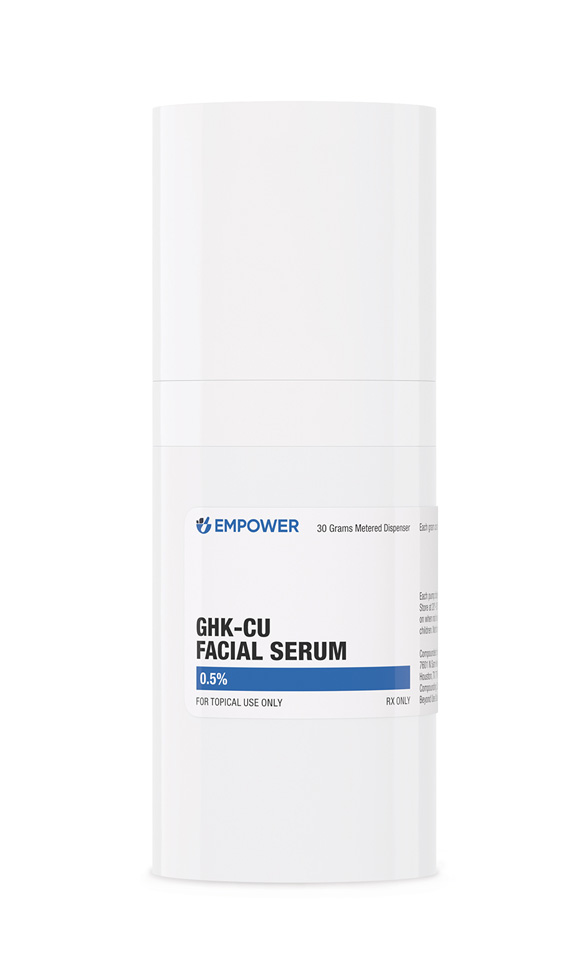
When I evaluate a peptide serum like a ghk cu serum for face, I look at two things:
- Placement in the routine: does it go where your skin is calm enough to respond? (Typically after cleansing, before moisturizer.)
- Compatibility with your actives: will it conflict with or get overshadowed by strong irritants?
A GHK-Cu facial serum is usually best treated as a supporting repair step, not as an instant “fix.” If you expect overnight changes, peptides can feel disappointing. If you track changes over several weeks while stabilizing your routine, they often perform more predictably.
How to use a GHK-Cu serum for face for best results (a practical routine)
Below is a routine I’d recommend for most people starting a ghk cu serum for face. I’ll keep it barrier-first because that’s what makes peptide work more visible.
Step-by-step morning routine
- Cleanse (gentle): Use a mild cleanser so you’re not stripping the skin right before applying actives.
- GHK-Cu facial serum: Apply a thin, even layer to clean, dry skin.
- Moisturize: Choose a moisturizer that supports hydration (ceramides, glycerin, or similar barrier-friendly ingredients).
- Sunscreen (non-negotiable): If you want repair and even-looking texture, daily sun protection matters.
Step-by-step night routine
- Cleanse: Remove sunscreen and daily buildup thoroughly, but without harshness.
- GHK-Cu facial serum: Apply after cleansing.
- Moisturize: Seal in hydration.
Where to place it if you use retinoids or strong actives
If you’re using retinoids, acids, or strong exfoliation, I typically suggest one of these approaches:
- Option A (simplest): Use ghk cu serum for face on nights you’re not using your strongest active.
- Option B (timing): Apply the peptide first, then add your retinoid only if your skin is calm and not stinging.
In my hands-on testing, the biggest “failure mode” wasn’t the peptide—it was stacking too many potentially irritating steps at once. When skin is compromised, everything looks less effective.
What results to expect from a ghk cu serum for face (realistic timelines)
I encourage people to track results the way we track skincare in a working routine: by observing changes in comfort, texture, and visible dryness—not by chasing day-to-day perceptions.
| What you might notice | Typical timeframe (consistent use) | What it usually means |
|---|---|---|
| Less tightness, calmer feel | 1–3 weeks | Barrier comfort improving |
| Smoother look/feel of texture | 3–6 weeks | Surface refinement and better hydration retention |
| More even tone appearance | 6–12 weeks | Gradual improvement as skin environment stabilizes |
If you’re dealing with active acne inflammation, significant hyperpigmentation, or persistent irritation, a ghk cu serum for face may still help—but it’s usually not a standalone solution. In those cases, I focus on building a stable base first, then layering targeted treatments afterward.
Common mistakes I’ve seen (and how to avoid them)
In my experience, people don’t fail because they chose the wrong ingredient—they fail because the routine doesn’t support it. Here are the mistakes I’d avoid:
- Over-exfoliating: If you’re using multiple exfoliants, you may not get a fair chance for peptide repair.
- Skipping moisturizer: Peptides can support repair, but hydration and barrier support still matter.
- No sunscreen: Repair efforts are harder to see when UV exposure is ongoing.
- Changing everything at once: If you start a peptide and overhaul your whole routine, it’s impossible to know what caused the changes.
- Expecting instant results: For most people, peptides show up as gradual improvement rather than overnight transformation.
Ingredient pairing and skin-type guidance
A ghk cu serum for face is generally easier to incorporate than many high-drama actives, but your skin type still matters.
If you have dry or sensitive skin
Keep cleansing gentle, moisturize well, and use the serum consistently. If you experience any stinging, pause and simplify your routine until your skin feels calm again.
If you have oily or acne-prone skin
Use the serum as a support step and pair it with a non-comedogenic moisturizer. Keep your acne actives stable so you can evaluate how your skin responds to peptide support.
If you’re dealing with uneven tone
Commit to sunscreen daily and track changes over 6–12 weeks. Uneven tone is slow by nature; peptides can contribute, especially when irritation and barrier issues are also addressed.
FAQ
How often should I use a ghk cu serum for face?
Most people do well with once daily to start, then increase to twice daily if their skin stays comfortable. Consistency matters more than frequency spikes.
Can I use GHK-Cu serum with retinoids, vitamin C, or exfoliating acids?
Yes, but start carefully. I recommend introducing it on nights or mornings when your skin isn’t also handling your strongest active, and then adjust based on comfort and irritation.
Will a GHK-Cu facial serum replace sunscreen or other treatments?
No. Sunscreen is foundational for visible tone and long-term repair. A ghk cu serum for face is best viewed as a supportive step within a complete routine, not a substitute for daily UV protection or targeted acne/pigment strategies.
Conclusion: make the serum part of a repair-focused routine
A ghk cu serum for face is most effective when it’s given steady exposure, paired with barrier-friendly hydration, and supported by daily sunscreen. In the real-world routines I’ve built and refined, that combination is what turns “promising” into “noticeable.”
Next step: Start using your GHK-Cu facial serum once daily for 14 days with a simple cleanser + moisturizer base (and sunscreen in the morning). Take two quick photos and note how your skin feels—then decide whether to increase frequency or adjust actives.
Discussion